 Standard/OE
In stock
$63.93
10 items in stock
Quality For FREE Shipping
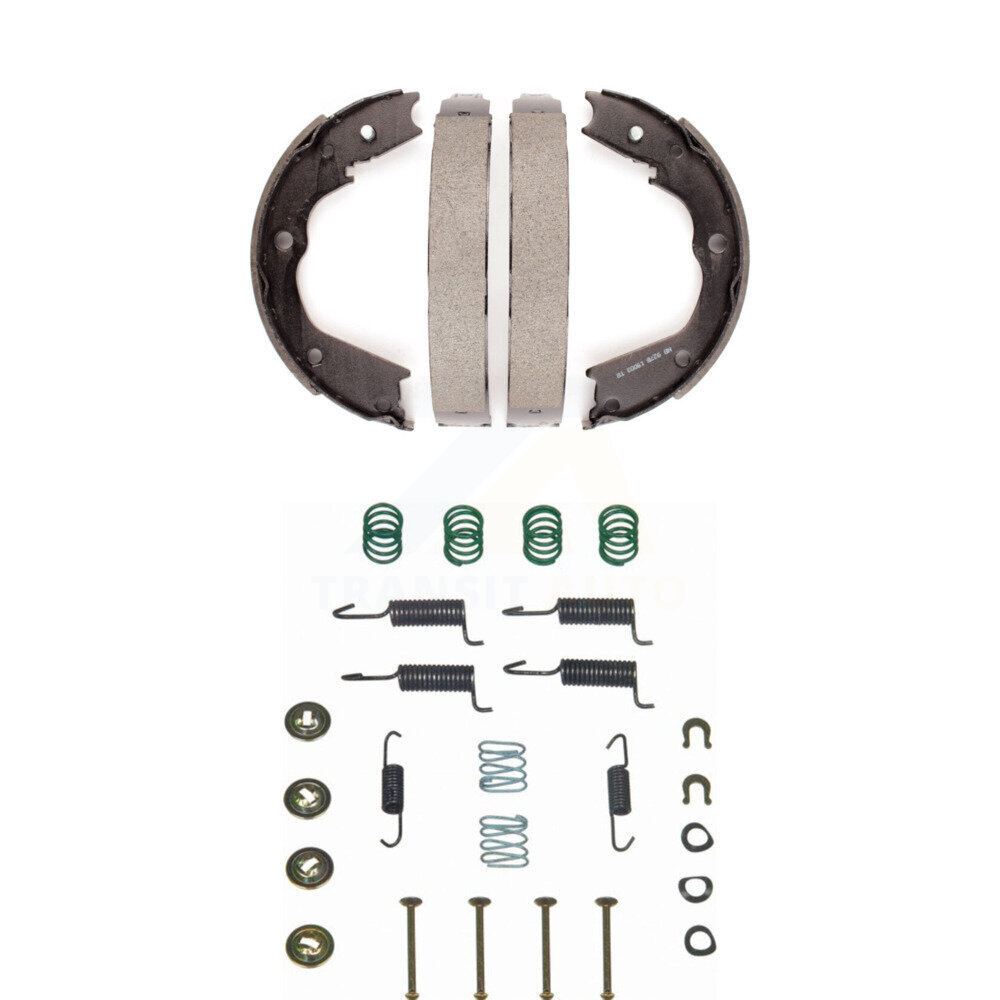
KNH-100047• Rear• Parking Brake Shoe Kits
Add Vehicle to Confirm Fitment
Select your vehicle to see compatible products and accurate pricing
GeoBrakes stocks complete parking brake shoe kits confirmed to fit the Honda Pilot drum-in-hat rear parking brake system, combining OEM-grade parking brake shoes matched to the Pilot drum diameter with the return springs, shoe strut, adjusting screw assembly, and retaining clips needed for a correct, fully functional parking brake service on your Honda Pilot. Replacing shoes without the hardware is the leading cause of parking brake failure after service on the Pilot in American conditions.
Standard/OE$63.93
10 items in stock
Select your vehicle to see compatible products and accurate pricing
A parking brake shoe kit for the Honda Pilot restores complete parking brake function, not just the friction lining. The most common reason a freshly serviced Pilot parking brake fails to hold on a hill is not worn shoes: it is a seized adjuster that prevents the shoe-to-drum clearance from being correctly set after installation on your Honda Pilot. In the enclosed drum-in-hat cavity of the Pilot, road salt and meltwater concentrate corrosion on the adjuster threads, the return springs, and the strut. A kit that includes every hardware component alongside the shoes is the only way to guarantee the Honda Pilot parking brake performs correctly after service.
The kit for your Honda Pilot includes parking brake shoes with OEM-grade friction lining at the correct arc length and lining width for the Pilot drum-in-hat diameter, return springs that retract both shoes cleanly after the Pilot parking brake is released, hold-down hardware with springs and pins that locate the shoes while permitting actuation on your Honda Pilot, the parking brake strut connecting both shoes through the Pilot mechanism, the adjusting screw assembly setting correct shoe-to-drum clearance for reliable holding force on your Honda Pilot, and retaining clips and washers securing the strut and adjuster in correct operating position on the Pilot.
The parking brake shoe adjuster on the Honda Pilot sets the gap between the shoes and the inner drum surface of the Pilot rotor hat. In American winters, the drum-in-hat cavity of the Pilot traps road salt and moisture. The adjuster threads on your Honda Pilot corrode and seize, sometimes within a single winter season. A seized adjuster on the Pilot produces a parking brake that either drags against the drum when released or fails to hold the Honda Pilot on a slope when engaged.
Parking brake shoe kits for the Honda Pilot are among the most vehicle-specific brake components in the catalogue. The shoe arc length, lining width, spring rates, strut length, and adjuster thread specification for the Pilot are all determined by the specific drum-in-hat diameter of the Honda Pilot rotor. Every kit in the GeoBrakes catalogue is assembled for the Honda Pilot exact year and model, with zinc-plated or coated hardware components to resist the concentrated corrosion inside the Pilot drum-in-hat cavity.
How do I know if my Honda Pilot uses parking brake shoes?
Honda Pilot vehicles with four-wheel disc brakes often use a drum-in-hat parking brake requiring separate shoes. Some Pilot variants instead use a caliper-actuated parking brake. Use the GeoBrakes vehicle selector to confirm your Honda Pilot parking brake type and find the correct kit.
My Honda Pilot parking brake light stays on after I release it, do the shoes need replacing?
A warning light that stays on after full release on the Honda Pilot can indicate worn shoes, a faulty sensor, low brake fluid, or a stretched cable on the Pilot. If the Honda Pilot fails to hold on a slope, a shoe kit replacement combined with cable and adjuster inspection is the recommended starting point for your Pilot.
Can I adjust the parking brake on my Honda Pilot after installing a shoe kit without replacing the cable?
Yes, if the Pilot cable is in good condition and within its adjustment range. After correct shoe installation and adjuster setting on the Honda Pilot, adjust the cable until the brake holds firmly within three to five clicks of Pilot lever travel.